

Forex Trading: A Comprehensive Guide to the Foreign Exchange Market
Forex trading is one of the largest and most liquid markets in the world, where currencies are bought and sold in a decentralized market. According to estimates, the forex market clears over $6 trillion a day, making it significantly larger than other financial markets combined. If you’re looking to venture into forex trading, understanding the foreign exchange market is essential. This article will provide you with key insights, strategies, and tips to be successful in this dynamic environment. For more resources and guidance, feel free to check out forex trading foreign exchange market https://trading-asia.com/.
The Basics of Forex Trading
At its core, forex trading involves exchanging one currency for another. The exchange rate reflects how much of one currency you need to spend to acquire another. For instance, if the EUR/USD pair is trading at 1.20, it means 1 Euro can be exchanged for 1.20 US Dollars. The market operates on a system of pairs, and traders buy one currency while selling the other.
The forex market is open 24 hours a day during the business week, which allows traders to engage in trading at their convenience. It operates across various global financial centers, such as London, New York, Tokyo, and Sydney, enabling continuous trading activity.
Understanding Currency Pairs
In forex trading, currencies are quoted in pairs. The first currency in the pair is known as the base currency, while the second currency is termed the quote currency. For example, in the EUR/USD pair, the Euro is the base currency, and the US Dollar is the quote currency.
There are three main types of currency pairs:
- Major pairs: These include the most traded currencies, such as EUR/USD, USD/JPY, and GBP/USD.
- Minor pairs: These pairs do not include the US Dollar and consist of currencies like EUR/GBP or AUD/NZD.
- Exotic pairs: These involve a major currency paired with a currency from a developing economy, like USD/TRY (Turkish Lira).
How Foreign Exchange Market Works
The forex market operates through a network of banks, brokers, and financial institutions. Unlike stock markets, the forex market is decentralized, meaning that trades do not occur on a centralized exchange. Instead, trading is facilitated through an Electronic Communication Network (ECN) or through over-the-counter (OTC) channels.
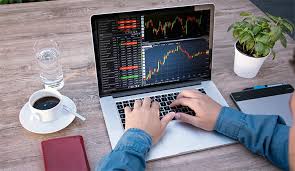
Understanding market dynamics is crucial. Prices in the forex market are influenced by various factors, including economic indicators, interest rates, political stability, and market sentiment. Traders use technical analysis to forecast potential price movements based on historical data, while fundamental analysis looks at broader economic factors.
Trading Strategies in the Forex Market
Successful traders often develop strategies based on their trading objectives and risk tolerance. Some popular strategies include:
- Scalping: This strategy involves making numerous short-term trades to capitalize on small price movements.
- Day trading: Day traders open and close positions within the same day, aiming to profit from intraday market fluctuations.
- Swing trading: This strategy involves holding positions for several days or weeks to benefit from larger price moves.
- Position trading: Long-term traders hold positions for extended periods, based on fundamental analysis and broader trends.
Risk Management in Forex Trading
Managing risk is critical in forex trading due to the market’s inherent volatility. Traders employ several techniques to protect their capital:
- Set Stop-Loss Orders: Stop-loss orders automatically close a position at a predetermined price, limiting potential losses.
- Use Proper Position Sizing: Determine how much capital to risk on each trade to balance potential gain against loss.
- Diversification: Spread your investments across multiple assets to reduce risk exposure.
The Role of Leverage in Forex Trading
Leverage allows traders to control larger positions with a smaller amount of capital. For example, with a 100:1 leverage, a trader can control a $10,000 position with just $100. While leverage can amplify gains, it can also increase losses, making effective risk management even more crucial.
Different brokers offer varying levels of leverage, and traders should be aware of the risks associated with high leverage before engaging in significant trades.
Essential Tools for Forex Traders
The right tools can enhance trading efficiency and effectiveness:
- Trading Platforms: Platforms like MetaTrader 4 (MT4) and MetaTrader 5 (MT5) provide interfaces for executing trades and analyzing markets.
- Market News and Calendars: Staying informed about economic events and announcements is essential for anticipating market movements.
- Technical Analysis Tools: Indicators and charting tools can help identify trends and potential entry/exit points.
- Demo Accounts: Many brokers offer free demo accounts where traders can practice and refine their skills without risking real money.
Conclusion: Starting Your Forex Trading Journey
Forex trading offers exciting opportunities for profit and growth, but it also comes with risks. New traders should focus on education, practice with a demo account, and develop a solid trading plan. As the foreign exchange market evolves, continuous learning and adaptation will be key to success in this competitive arena. Remember to manage your risks effectively and always trade responsibly.